A Five-Minute Listening Walk for Noticing Near and Distant Sounds
A five-minute listening walk gives you a simple way to notice nearby and far-off sounds, even when the scene is busy, quiet or interrupted.
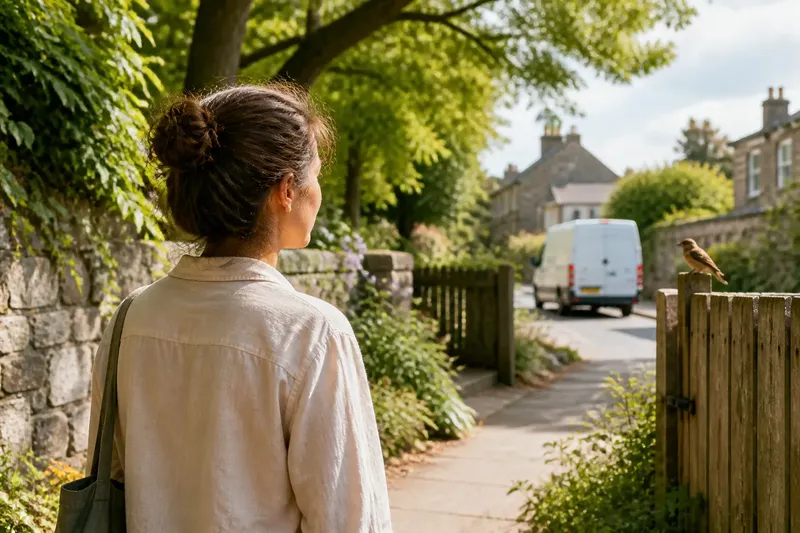
You step onto a garden path and hear a sharp tap from the fence. A moment later, a delivery van turns somewhere beyond the houses. A five-minute listening walk can make this change in scale the focus: follow how one sound meets another, rather than sorting the surroundings into a list.
The aim is not to identify every source or find a quiet place. Instead, notice how sounds overlap, interrupt one another and leave space behind them. This approach works while standing or moving at a comfortable pace, provided the place lets you stay aware of what is around you.
Listen for changes in the soundscape
Begin by hearing the whole scene for a moment. Then choose one sound that has a clear beginning, change or ending: a gate closing, shoes crossing gravel, a bird call, or water running along a drain. Follow its shape rather than deciding what it means.
Next, notice what happens around that sound. Does another sound continue underneath it? Does a distant engine grow louder, then fade? Is there a pause after a call, or does something else answer from another direction? The focus is on relationships between sounds, not on moving from near to far.
For the final part, let several layers sit together. You might hear a steady background hum, a brief rustle and your own footsteps. If your attention slips, pick up whichever sound has changed most recently.
Let the sounds overlap without trying to name them all.
Use a simple decision list to adapt the walk
- If a sound is loud enough to mask the rest, move to a more comfortable suitable spot if it is safe; otherwise end the walk rather than forcing yourself to listen through it.
- If the scene seems quiet, notice one subtle change such as a leaf shifting or air moving; if nothing stands out, stay with the quiet instead of searching for a sound.
- If one repeated sound keeps drawing attention, listen to one occurrence and then attend to what continues before or after it; if that remains difficult, allow the repeated sound to be the whole focus.
- If you start guessing at a source, describe its quality instead, such as a soft scrape or a short high note; if its source becomes clear naturally, you may name it without pursuing further guesses.
- If wind or rain obscures small details, listen to the broad texture it creates; if conditions feel uncomfortable or make the route difficult, choose shelter or stop.
- If you need to cross, watch your footing or make room for another person, give that task your attention; resume listening only when you can do so safely.
Why does listening to overlapping sounds help?
Do I need to identify each sound?
No. A brief description such as “a low hum” or “two quick taps” is enough to keep attention with the sound. Identification is optional, and guessing can distract from how sounds relate.
What if one sound dominates the scene?
Notice whether it changes in volume, rhythm or distance, then listen for anything that continues beneath it. If the sound makes the place uncomfortable or unsafe, leave or stop instead of treating concentration as the goal.
Can I do the walk without moving?
Yes. You can stand or sit somewhere suitable and follow sounds as they begin, overlap and fade. Keep awareness of the setting, especially near paths, roads or other people.
What should I do when attention wanders?
Return to a sound that has changed recently, such as a passing vehicle fading or a branch tapping again. You do not need to restart or make up for the time you missed.
A worked example follows the sound layers
Imagine you begin beside a courtyard wall, where a loose gate clicks whenever the wind moves it. First, you listen to the click’s uneven rhythm. Then you notice a low road hum continuing underneath, and a few footsteps crossing the paving between clicks. For the final part, you attend to all three: the intermittent gate, the steady hum and the passing steps.
The result is not a correct answer about the courtyard; it is a clearer sense of which sounds pause and which persist. If the wind stops and the gate falls silent, the next useful observation is simply what remains.
Choose a setting that leaves room for attention
A garden, courtyard, park path or familiar pavement can suit this practice. Choose somewhere you can pause or move without losing awareness of hazards. A lively place may offer overlapping layers, while a sheltered spot may make small changes easier to hear; neither needs to be treated as the ideal setting.
Keep ordinary awareness ahead of the exercise. Look up when crossing, leave room for other path users and stop somewhere out of the way if you want to listen without moving. If the route needs your full attention, attend to the route.
Weather also shapes the scene. Rain can create a continuous patter, while wind may blur smaller sounds. You can listen to those broad textures, or stop if the conditions make the outing uncomfortable.
Keep the five-minute listening walk open-ended
Five minutes is a loose boundary, not a target to fill. A conversation, a sudden clatter or a stretch of quiet may interrupt the listening; each can simply alter what is present. Stop sooner if that suits the moment, or continue only if you have time and still feel attentive to your surroundings.
On a five-minute listening walk, ask what continues, what changes and what disappears. That question shifts the focus from collecting sounds to hearing how the scene unfolds, one ordinary moment at a time.